

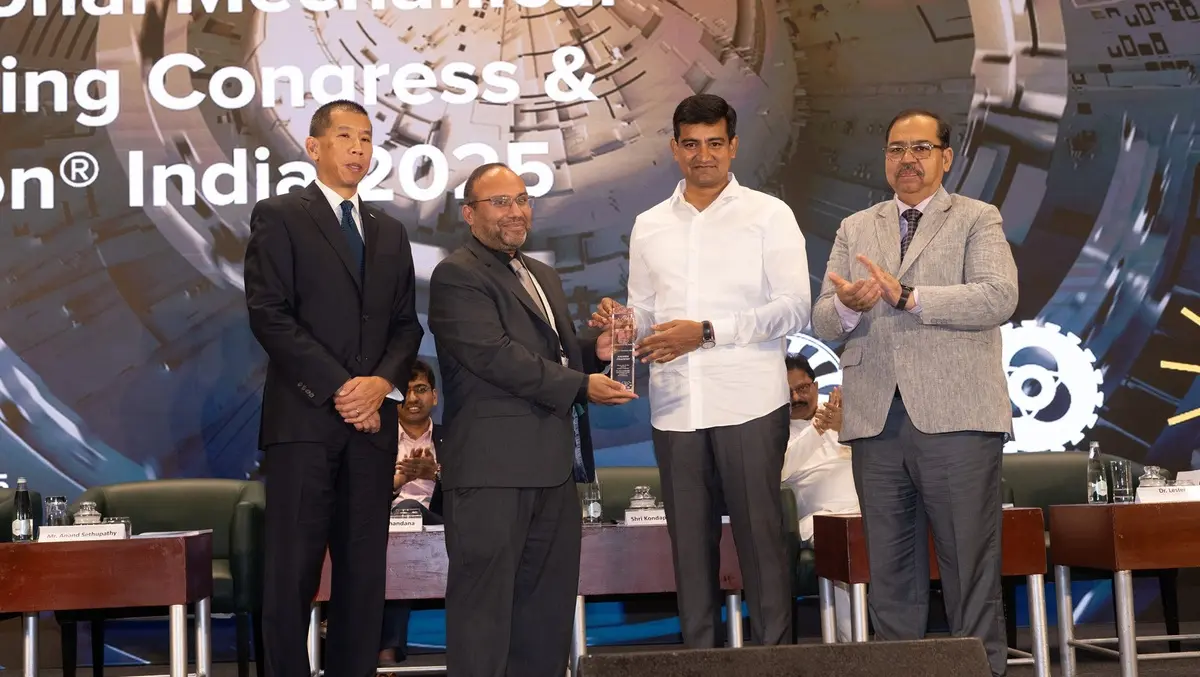

The International Mechanical Engineering Congress & Exposition (IMECE) has been held in India for the first time, with Hyderabad hosting IMECE India 2025.
ASME, the American Society of Mechanical Engineers, organised its signature event featuring 11 technical tracks and five focal content areas, including an MSME Conclave, Innovation Square for hardware-focused startups, an engineering education symposium, a Women in Engineering panel, and dedicated student engagements such as a six-hour design sprint. The congress adopted the theme of "Innovation, Sustainability, and Inclusion."
Collaboration platform
The event was envisioned as a collaborative space for academia, industry, and government stakeholders to discuss and drive pathways for engineering and technology advancement. Notable speakers included Baba N. Kalyani, Chairman and Managing Director of Bharat Forge, Dr K. Subramanian, Senior Vice President of Ashok Leyland and Congress Chair, Thomas Costabile, ASME Executive Director and CEO, and Madhukar Sharma, President of ASME India.
Baba N. Kalyani offered his view on India's evolving role in global mechanical engineering and highlighted the significance of the event for the nation.
"In the last five decades, I have seen how India has shifted from muscle power to brain power, embracing automation, robotics, and advanced manufacturing. Today, as the world undergoes five major transitions - digital and AI, energy, bioengineering, supply chains, and human capital - India has the talent and the scale to play a defining role. It is historic that ASME has brought IMECE to India for the first time outside the United States."
"ASME has long been instrumental in shaping standards in the US, and here in India it can help bridge critical gaps in knowledge, technology, and research. Our challenge is not to remain a support economy, but to become a true products nation - designing and developing for ourselves, and in doing so, shaping the future of global engineering."
Dr K. Subramanian commented on the scope and significance of the congress, stating: "It is an honour to lead IMECE India 2025, convening global minds to advance engineering solutions for sustainability, innovation, and inclusivity. This historic event marks a milestone in shaping transformative technologies and fostering collaboration to address critical challenges facing our world."
Thomas Costabile, ASME Executive Director and CEO, underscored the longer-term focus of ASME's work in India:
"We believe that by unlocking the full potential of India's mechanical engineering ecosystem, we can collectively improve quality of life and prosperity not just in India, but around the world. The challenges we face - in energy, healthcare, climate resilience, and sustainable mobility - demand global solutions. That's why ASME is making significant investments in India, in programs, platforms, and partnerships that will last far beyond the IMECE India event."
Record participation
Madhukar Sharma, President and Director of ASME India, reflected on the event's historic scale, saying: "IMECE India marks a historic first as 145 years of ASME excellence finally comes home. By bringing IMECE to India, ASME demonstrates its unwavering commitment to nurture the art, science, and practice of mechanical and allied engineering. Over 650 rigorously peer reviewed papers across 11 engineering domains will be presented September 11-13 at HICC, Hyderabad marking the highest-ever participation by Indian scholars at ASME IMECE in 30 years, made possible only because IMECE is happening here in India."
The high-level panel titled "Advancing Research – Creating Vibrant and Enabling Research Architecture for Rapid Technology Development and Deployment" featured speakers from international academia and industry, including Dr Yogi Goswami (USF), Dr Shivkumar Kalyanaraman (Anusandhan NRF), Dr Jitendra Sharma (AMTZ Vizag), Dr Jocelyn Gaudin (Airbus India), and Dr Sasikumar Muthusamy (Collins Aerospace). The discussion centred on India's trajectory toward becoming an international centre of innovation and outlined both the nation's strengths - such as a strong talent pool and vibrant startup ecosystem - and the structural barriers to greater impact in research and development.
Student focus
IMECE India 2025 was marked by the highest-ever student involvement at an ASME IMECE in three decades, with more than 650 peer-reviewed papers and the 'Brain Bolt: The Engineer's Sprint' hackathon. Over 230 students from various institutions participated in this design sprint, which encouraged design thinking and rapid prototyping, and expanded upon ASME's student initiatives, including E-Fx and E-Fests.
Startups and industry
ASME's emphasis on collaboration was further demonstrated in the Innovation Square, which served as a platform for hardware-led startups to display their ideas. The Expo Space included over 30 showcases from state governments such as Telangana and Andhra Pradesh, as well as representatives from leading industrial and academic organisations. These activities were aligned with India's Make in India mission, aiming to build skills and promote exposure among engineers for leadership in advanced manufacturing.
The congress brought together key groups from academia, industry, startups, government, and policy, and discussed methods to strengthen India's research infrastructure, support technology transfer, and enhance curriculum and skills through ongoing investments and partnerships led by ASME in the country.