Decarbonisation stories
Siemens finds national energy resilience and independence now outrank climate goals for executives amid geopolitical risks and supply chain volatility.
Siemens and Airbus partner to slash CO2 emissions by 80 kilotonnes annually at four major UK and US sites by 2030, aiming for greener industrial operations.
Last Energy and DP World will invest GBP £80 million in a micro-nuclear plant at London Gateway to power its GBP £1 billion port expansion by 2030.
Kyndryl reports an 18% cut in greenhouse gas emissions and a 15% reduction in energy use, advancing its sustainability goals for FY25.
The Open Group has formed the Industrial Advanced Nuclear Consortium to standardise nuclear heat and power solutions, aiming to boost industry adoption and reduce costs.
Passengers on the Manawatū and Wairarapa lines will see services doubled from 2030 as Greater Wellington orders 18 battery-electric trains.
New camera analytics are helping biogas operators pinpoint and measure methane leaks faster, reducing safety risks and emissions losses.
Companies are embedding sustainability into daily operations with AI tools, smart offsets and data-driven steps to cut carbon emissions faster.
New Zealand stands poised to lead in sustainable data centres, harnessing 85% renewable energy to power AI growth worth NZD $3.4b annually by 2035.
A partnership with Arkema and BASF has lowered the embodied carbon of architectural powder coatings used on new buildings across their full lifecycle.
Singapore EXPO adopts ESG tech to track carbon emissions at events, supporting the Green Plan 2030 and greener MICE industry practices across Singapore.
Greater reuse of building materials could cut emissions, lower costs and ease supply-chain risks as retrofits and construction expand.
A German pilot due in 2027-28 could store renewable power for months, offering a long-lived alternative to costly lithium-ion batteries.
Rising grid strain and climate shocks are forcing Australia and New Zealand to speed up electrified, digital infrastructure for safer, cleaner cities.
Australia unveils its 2035 climate goal, urging practical action to decarbonise energy and freight sectors while ensuring economic resilience and grid stability.
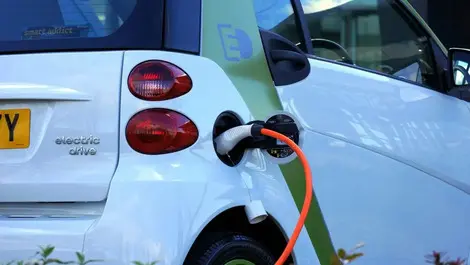
Evie Networks secures AUD $50m senior debt to expand Australia's public EV fast-charging network, signalling growing investor confidence in EV infrastructure.
Banks can speed up the home energy transition by offering green mortgages that fund retrofits, lowering costs and cutting household emissions effectively.
Meridian Energy modernises finance ops with DXC's unified Oracle Fusion Cloud, enhancing efficiency and supporting New Zealand's renewable energy goals.
New Zealand is set to generate enough solar power to supply every home by 2032, with installed capacity more than doubling in two years.
WiseTech teams with ACFS to deploy optimisation software across its container fleet, targeting smoother port flows and lower emissions.