

Schaeffler India opens research hub at IISc Bengaluru
Fri, 15th May 2026 (Yesterday)
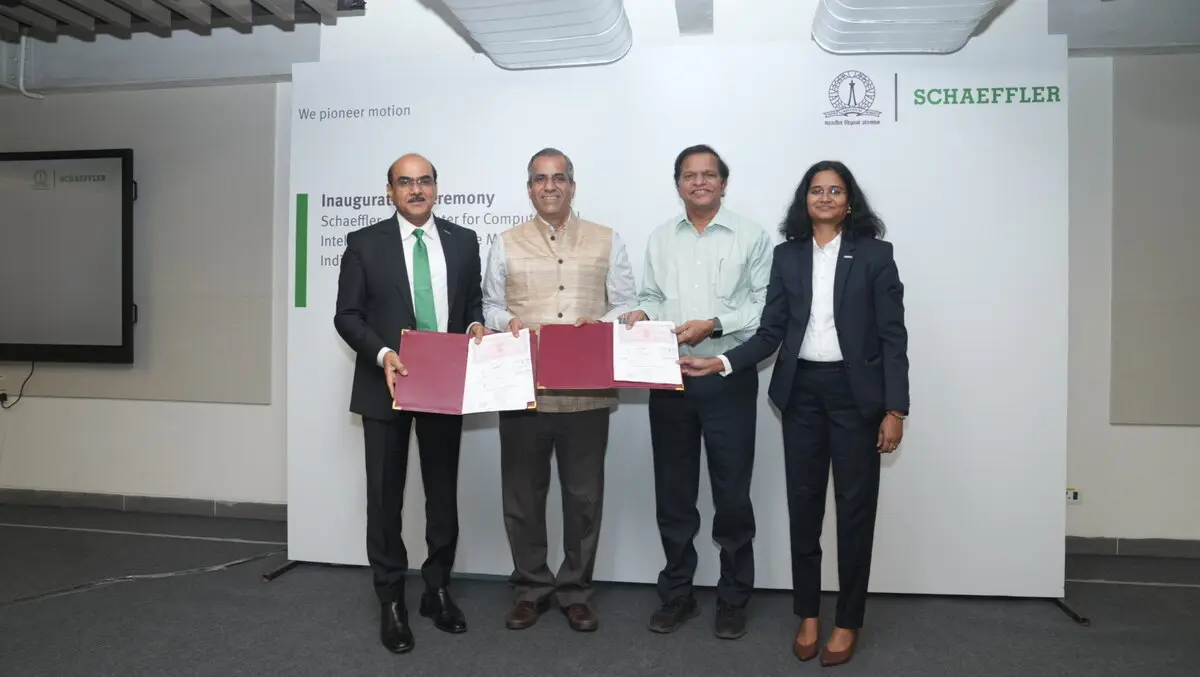
Schaeffler India has opened a computational research facility at the Foundation for Science Innovation and Development in Bengaluru as part of its work with the Indian Institute of Science.
The new set-up is designed to expand FSID's computing resources with dedicated lab space, in-rack cooling systems, power backup, and hybrid computing workstations and clusters. It is intended to support large-scale simulations, data-intensive modelling, and advanced analytics in areas including materials, energy systems, and sustainable mobility.
The company has also signed a Master Research Agreement with the Indian Institute of Science, creating a framework for multiple research projects between the two organisations. The agreement adds a formal research partnership to the infrastructure investment at the Bengaluru-based foundation.
FSID serves as an interface for collaborative research with industry and deep-science innovation at the Indian Institute of Science. The upgraded facility will be available not only to faculty members at the institute, but also to startups incubated at FSID, other startups and MSMEs seeking access to advanced digital infrastructure, and industry partners involved in research collaborations.
The wider academic community is also expected to use the expanded infrastructure, including PhD scholars, postgraduate and undergraduate students, and postdoctoral researchers linked to projects at the institute and the foundation.
Research access
The announcement reflects a broader pattern of closer ties between industry and academic institutions in India, with companies backing research infrastructure to gain earlier access to scientific work and engineering talent. In this case, the facility has been supported through Schaeffler India's CSR programme, HOPE.
Harsha Kadam, managing director and chief executive officer of Schaeffler India, said the partnership reflected the company's approach to research and skills development.
"At Schaeffler India, we are committed to building skills and manufacturing excellence rooted in India's unique strengths, aligned with its needs, and geared towards creating lasting value. Such efforts depend on strong academia-industry collaboration, with institutions like the Indian Institute of Science playing a critical role in equipping researchers with the right tools and expertise.
We're proud to support its latest computational infrastructure through Schaeffler India's CSR programme, HOPE. Beyond its immediate purpose, the facility will empower a wide spectrum of IISc research projects across diverse streams and teams, thereby amplifying the impact of collaborative research. Schaeffler India and IISc have a strong pipeline of joint projects, and our teams are fully aligned to move into execution. It reflects what's possible when two organisations come together with a shared purpose to strengthen research across multiple disciplines at IISc," he said.
The facility is intended to strengthen computing support for interdisciplinary work, particularly where simulation and digital modelling are central to development. Such systems are increasingly used in materials science, energy research, and transport-related engineering, where access to computing infrastructure can shape the pace and scale of projects.
Sai Gautam Gopalakrishnan, associate professor of materials engineering at the Indian Institute of Science, said the project had a long-term goal of reaching much greater computing scale.
"The initiative of Schaeffler India to establish a high-performance computational facility for developing intelligent and sustainable systems at FSID, IISc, is highly commendable. With the long-term aim of creating a computational facility with a peak performance of around 32 PFLOPs, comprising a mixture of CPUs and GPUs, the facility will be highly beneficial for the research groups at IISc, startups incubated at FSID, and industries that collaborate with FSID and IISc. We look forward to the increasing digitalisation, automation, and acceleration of research that this facility can create around the IISc ecosystem and the upcoming long-term collaborative activities with Schaeffler India," he said.
Industry links
For FSID, the additional infrastructure is intended to support both academic researchers and companies working alongside the institute. The foundation's role in connecting industry-backed projects with scientific research gives the investment a direct link to product development and applied engineering.
Prof B. Gurumoorthy, director of the Foundation for Science Innovation and Development, said, "As the interface for collaborative research with industry and deep-science innovation at the Indian Institute of Science, we are pleased to have this new infrastructure, which will significantly strengthen our ability to support faculty and other researchers pursuing interdisciplinary work across materials, energy systems, and sustainable mobility. This collaboration with Schaeffler India marks an important step in enhancing FSID's capabilities in high-end simulations, data-intensive research, and next-generation technology development. We see this as a strong example of how industry-academia partnerships can accelerate research and innovation with real-world relevance."