

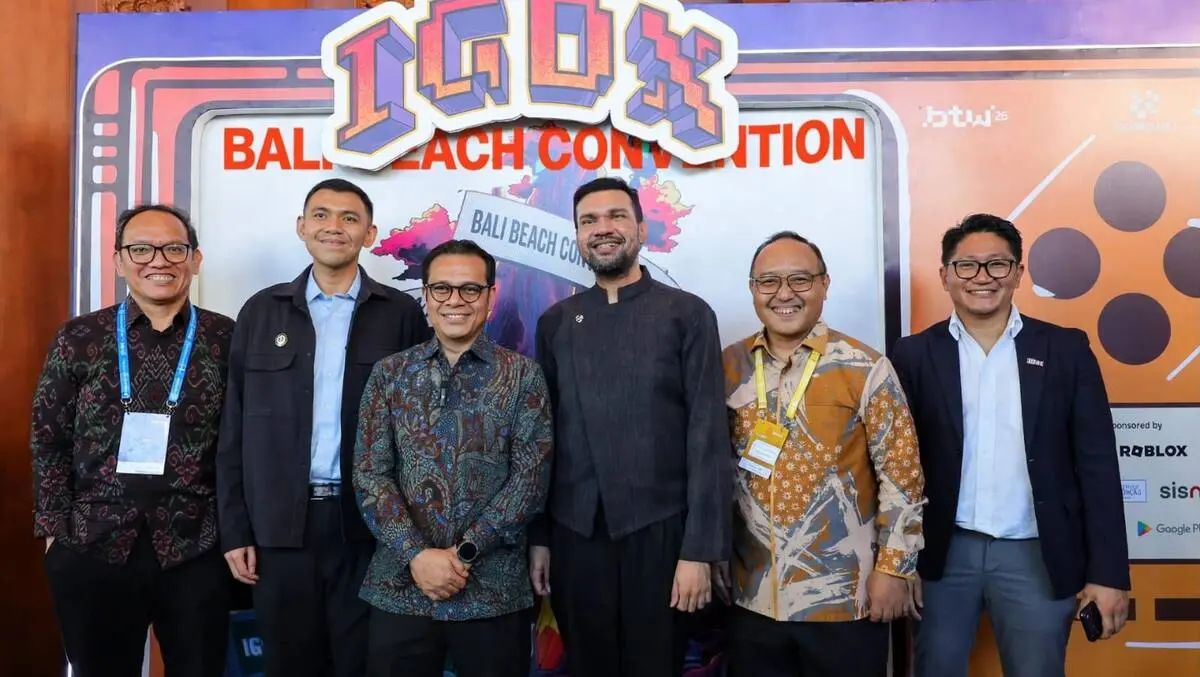
Indonesia hosts major game developer forum in Bali
Fri, 23rd Oct 2026 (Today)
The Ministry of Communication and Digital and the Indonesian Game Association have opened the Indonesia Game Developer Exchange Business & Conference 2026 in Bali, bringing together 339 game studios and 66 publishers from 31 countries.
Held at the Bali Beach Convention in Sanur as part of Bali Tech Week, the forum also drew investors and other industry participants. Organisers said 543 Business Pass holders took part in business meetings, while 1,037 Public Pass holders attended the wider event.
The gathering reflects a push by Indonesian officials and industry groups to give local game developers more direct access to publishing, investment and distribution partners. It also highlights efforts to position games more firmly within the country's broader digital economy strategy.
Officials described the event as a venue for business meetings, conferences, product demonstrations and exhibitions, aimed at helping Indonesian studios form partnerships, secure funding and expand into international markets.
Sonny Hendra Sudaryana, Director of Digital Ecosystem Development at the Ministry of Communication and Digital, said the event has become a central meeting point for the local industry.
"IGDX has become a meeting point for the Indonesian gaming industry, where technology, creativity, business, and culture converge. Games are not only entertaining, but also tell stories, express our identities, and create economic opportunities," Sudaryana said.
IGDX began in 2019 and has since expanded into a broader set of programmes covering bootcamps, accelerators, careers, business meetings and conferences. The model is designed to connect early-stage talent and studios with publishers, distributors, investors and other commercial partners.
That growth comes as Indonesia seeks to turn its large consumer internet market into stronger domestic content industries. Officials linked the games sector to wider efforts to support digital talent, startup formation and commercialisation.
Digital economy
The ministry cited the e-Conomy SEA 2025 report, which estimated that Indonesia's digital economy would reach USD $99 billion in gross merchandise value by 2025, up 14 per cent from the previous year. Within that context, games are being positioned as both a creative export and a domestic technology business.
The ministry also pointed to its Garuda Spark programme as part of the sector's support structure. It said 178 programmes have reached more than 15,700 digital talents, supported 80 startups and involved 80 partners, with direct investment totalling more than IDR 429.5 billion.
Officials said the same network is now available to games companies attending IGDX, with the aim of making it easier for local studios to develop products, secure funding and build market access. The focus is not only on individual titles, but also on building intellectual property that can compete internationally while retaining a distinct Indonesian identity.
Industry pressure
The event's theme focused on creative resilience, reflecting the pressure facing game developers as technology and market conditions shift. Industry participants are dealing with changes tied to artificial intelligence, immersive formats and evolving player expectations, all of which can alter production processes, cost structures and routes to market.
Edwin Hidayat Abdullah, Director General of Digital Ecosystems at the Ministry of Communication and Digital Affairs of the Republic of Indonesia, said resilience should be understood as adaptation and growth rather than simple survival.
"In the face of this disruption, resilience is the capacity to innovate, transform, and grow amidst uncertainty. We want Indonesian game industry players to not only be spectators of global change, but also creators, innovators, and players to be reckoned with on the world stage," Abdullah said.
By placing IGDX within Bali Tech Week, organisers also tied the games sector to a wider technology and digital economy agenda. For local developers, that creates a setting in which game production sits alongside investment discussions, startup development and international business networking, rather than standing apart as an entertainment category.
The Indonesian Game Association used the event to underline the need for long-term cooperation between studios, publishers and policymakers. Its leadership framed the current moment as one that requires persistence as well as creative output, particularly for smaller companies seeking to scale beyond the domestic market.
"Amidst various challenges, our presence today demonstrates our continued belief in the future of the Indonesian game industry. It takes creativity, courage, patience, and resilience to continue building this industry. Let's work together to strengthen the Indonesian game ecosystem to make it more competitive and able to bring Indonesian work and talent to the global market," said Shafiq Husein, President of the Indonesian Game Association.