

Equinix opens first self-built Mumbai data centre MB3
Fri, 10th Apr 2026
Equinix has opened its fourth International Business Exchange data centre in Mumbai, expanding its presence in what it calls India's most interconnected digital hub.
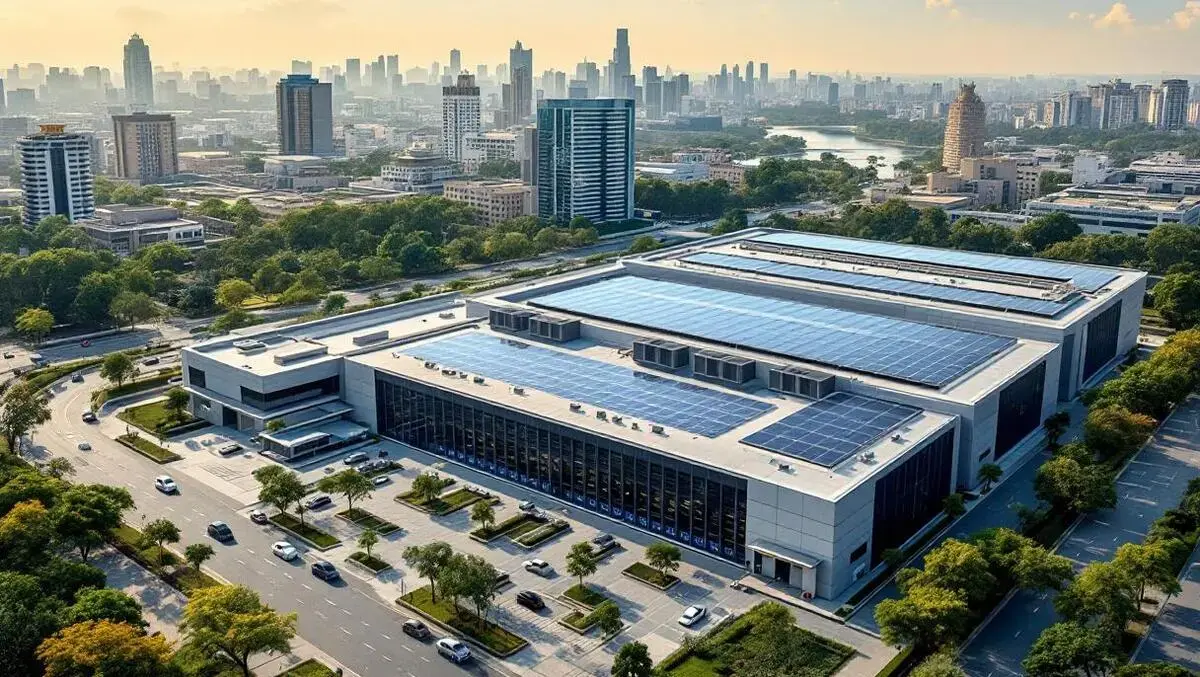
The new facility, MB3, is Equinix's first self-built data centre in Mumbai and part of an investment of more than USD $95 million. It launches with capacity for more than 1,370 cabinets and can scale to more than 5,475 at full build-out.
Located in Chandivali, Powai, the five-storey building sits on nearly four acres and joins Equinix's existing Mumbai sites MB1, MB2 and MB4. MB3 is adjacent to MB2 and about 1.5km from MB1, with the sites connected by dark fibre networks.
The launch comes as demand in India rises for infrastructure that can support artificial intelligence workloads, cloud migration and data localisation requirements. MB3 includes liquid cooling and is designed for dense computing environments.
Mumbai has become a key market for data centre operators because it hosts a large share of India's digital infrastructure and serves as a major interconnection point for enterprises, telecoms providers and cloud companies. Equinix's Mumbai and Chennai campuses together now provide more than 4,725 cabinets of capacity.
Its cumulative investment in India has now exceeded USD $365 million. Equinix's Indian operations serve more than 300 companies, including network service providers, five internet exchanges and customers across several industries.
India demand
MB3 is intended to give customers direct access to cloud providers, networks and business partners through Equinix's existing campus and interconnection services. The Mumbai campus includes on-ramps to providers such as Alibaba Cloud, AWS, Google Cloud, IBM Cloud, Oracle Cloud and SFDC.
MB3 is also linked to Equinix's Chennai data centre, CN1, giving customers access across both markets. The setup is designed to support redundancy and regional traffic management for businesses operating across India.
India's digital economy is expected to reach USD $1 trillion by 2027-2028, according to figures cited by Equinix, with growth driven by digital public infrastructure and online services. Businesses are also facing stricter expectations around where sensitive data is stored and processed.
Those pressures are shaping investment decisions by both data centre operators and enterprise customers. Low latency, local hosting and secure interconnection have become more important as companies move artificial intelligence projects from pilots to live deployments.
Shri Devendra Fadnavis, Hon'ble Chief Minister of Maharashtra, said, "We are pleased to welcome Equinix, a global leader, on the launch of its first self-built data center in Mumbai. With Maharashtra hosting nearly 60% of India's data center capacity, the addition of the AI ready MB3 data center, along with Equinix's solar plant in Yavatmal, further strengthens Mumbai's position as the country's premier digital hub. These investments reflect strong confidence in Maharashtra's pro‐investment policies and focus on sustainable, next‐generation infrastructure. We look forward to expanding our partnership with Equinix."
Customer view
Kotak Securities is among the companies using Equinix's Mumbai campus. The brokerage highlighted market speed, data sovereignty and resilience as key factors in infrastructure planning.
Anil Kumar Nair, Head of IT Infrastructure & Cyber Security, Kotak Securities, said, "India's financial markets are moving faster than ever, and our infrastructure needs to keep pace. Low-latency connectivity, data sovereignty, and operational resilience are non-negotiable for us. Equinix's MB3 strengthens a campus we already trust, and gives us the density, interconnection and cloud adjacency to support our next phase of AI-driven innovation, whether that's real-time analytics, algorithmic trading infrastructure or next-generation client experiences."
Equinix operates 280 data centres across 77 markets in 36 countries. In Asia-Pacific, it has 64 data centres across markets including Australia, China, Hong Kong, India, Indonesia, Japan, Korea, Malaysia, the Philippines and Singapore.
Sustainability push
MB3 has 100% renewable energy coverage. Equinix also recently commissioned a 26.4 MWp group captive solar project in India under a long-term agreement with CleanMax.
That solar project is expected to generate about 41.4 million kWh of clean energy a year and cut carbon emissions by more than 30,000 tonnes annually.
Cyrus Adaggra, President, Asia-Pacific, Equinix, said, "India continues to play a pivotal role in shaping Asia‐Pacific's digital future, and the opening of MB3 strengthens our ability to support customers as they navigate new growth driven by cloud adoption, AI innovation and increasing interconnection needs. With this expansion, organizations can now tap into greater capacity and a globally consistent platform, helping them accelerate transformation and unlock the full potential of India's fast‐growing digital ecosystem. Equinix remains firmly committed to investing in India and building the infrastructure that empowers our customers to thrive."
Manoj Paul, Managing Director, India, Equinix, said, "India is at a pivotal stage in its digital transformation, with growing AI and cloud adoption and stricter data localization requirement that are shaping the next phase of economic growth. The Union Budget 2026 proposals, including a tax holiday for global cloud providers leveraging India-based data center infrastructure and the introduction of safe harbor provisions, are viewed as strong policy enablers that reinforce the country's position as a trusted global digital hub. As enterprises embrace hybrid multicloud and prepare for AI inferencing at scale, seamless interconnection between businesses, network service providers and hyperscalers becomes essential. The launch of MB3 comes at exactly the right time, providing the ecosystems, interconnection density and scalable capacity needed to power India's next wave of digital expansion."